

Football socks are an essential part of a player's kit, providing not only style but also functionality. As a football socks supplier, I've had the privilege of working with a wide range of materials to create high - quality products. In this blog, I'll delve into the materials commonly used in football socks and their unique properties.
Cotton
Cotton is one of the most traditional materials for football socks. It is a natural fiber derived from the cotton plant. One of the main advantages of cotton is its breathability. The porous structure of cotton allows air to circulate around the foot, which helps to keep the feet cool and dry during a game. This is crucial as excessive sweating can lead to discomfort and even blisters.
Another benefit of cotton is its softness. It feels gentle against the skin, reducing the risk of irritation, especially for players with sensitive skin. Cotton also has good absorbency, meaning it can soak up sweat effectively. However, cotton does have some drawbacks. It dries relatively slowly, so if a player gets their socks wet, they may feel heavy and uncomfortable for an extended period. Additionally, cotton socks may lose their shape over time with repeated washing and use.
At our company, we use high - quality cotton in some of our Youth Football Socks. The softness of the cotton makes it ideal for young players, who may be more sensitive to the feel of their equipment.
Polyester
Polyester is a synthetic fiber that has become increasingly popular in football socks. It is made from polymers, which are long chains of molecules. One of the key features of polyester is its durability. It can withstand the rigors of intense football matches, including stretching, pulling, and rubbing against other players' boots.
Polyester is also highly moisture - wicking. It can quickly move sweat away from the skin to the outer surface of the sock, where it can evaporate more easily. This helps to keep the feet dry and reduces the chances of developing blisters. Unlike cotton, polyester dries very quickly, so players can stay comfortable even if they get their socks wet.
However, polyester is not as breathable as cotton. It can sometimes trap heat, making the feet feel warm. To address this issue, many manufacturers, including us, blend polyester with other fibers. We use polyester in our Non Slip Football Socks. The durability of polyester ensures that the non - slip features remain intact even after multiple uses.
Nylon
Nylon is another synthetic fiber commonly used in football socks. It is known for its strength and elasticity. Nylon fibers are very tough, which means they can resist tearing and abrasion. This is particularly important in football, where players are constantly moving and may come into contact with rough surfaces.
The elasticity of nylon allows the socks to stretch and conform to the shape of the foot. This provides a snug fit, which is essential for preventing the socks from slipping down during a game. Nylon also has good moisture - management properties, similar to polyester. It can help to keep the feet dry by wicking away sweat.
One drawback of nylon is that it can be a bit less breathable than natural fibers. It may also generate static electricity, which can be uncomfortable for some players. We incorporate nylon into some of our Long White Football Socks to enhance their durability and fit.
Spandex
Spandex, also known as Lycra, is a synthetic elastomer. It is famous for its exceptional stretch and recovery properties. Even a small amount of spandex can significantly increase the elasticity of a sock. This is beneficial in football socks as it allows the socks to fit closely to the leg without restricting movement.
Spandex - containing socks can adapt to the different movements of a player's legs, whether they are running, jumping, or changing direction. This ensures a comfortable and secure fit throughout the game. However, spandex is not very breathable on its own. It is usually blended with other fibers such as cotton, polyester, or nylon to create a more balanced fabric.

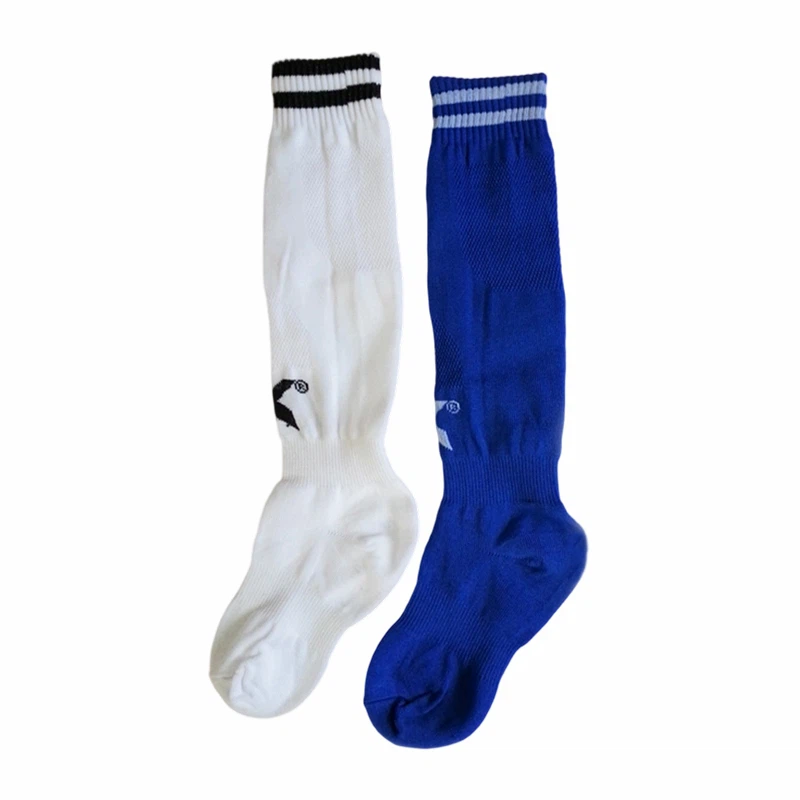
In our production, we use spandex blends to make sure that our football socks provide the perfect combination of stretch and comfort. Whether it's for youth players or professional athletes, the addition of spandex helps the socks to stay in place and move with the body.
Merino Wool
Merino wool is a natural fiber obtained from Merino sheep. It has several unique properties that make it suitable for football socks. First of all, merino wool is extremely breathable. It has a fine structure that allows air to flow freely, keeping the feet cool in warm weather and warm in cold conditions.
Merino wool also has excellent moisture - wicking capabilities. It can absorb a large amount of moisture without feeling wet. The wool fibers can actually store moisture in their core, which helps to keep the skin dry. Moreover, merino wool has natural antibacterial properties. It can reduce odor - causing bacteria, which is a great advantage for football players who may be sweating a lot during a game.
However, merino wool can be more expensive than other materials. It also requires more careful washing to maintain its quality. We offer some premium football socks made with merino wool for those players who are willing to invest in high - end equipment.
Blended Fabrics
In reality, most football socks are made from blended fabrics. By combining different fibers, manufacturers can take advantage of the unique properties of each material while minimizing their drawbacks. For example, a blend of cotton and polyester can offer the breathability of cotton and the moisture - wicking and durability of polyester.
A blend of nylon and spandex can provide the strength and elasticity needed for a secure fit. At our company, we carefully select the fiber blends for each type of football sock we produce. We consider factors such as the target market (youth, adult, professional), the playing conditions (indoor, outdoor, different climates), and the desired functionality (non - slip, moisture - wicking, stretch).
As a football socks supplier, we are committed to using the best materials to create products that meet the needs of players at all levels. Whether you're a young player just starting out or a seasoned professional, we have a wide range of football socks to choose from.
If you're interested in our football socks, we invite you to reach out to us for procurement and negotiation. We can discuss your specific requirements, such as quantity, customization options, and pricing. Our team is dedicated to providing you with the highest level of service and the best - quality football socks.
References
- Textile Institute. "Handbook of Textile Fibres." Woodhead Publishing, 2019.
- Horrocks, A. R., & Anand, S. C. (Eds.). "Fibre Science and Technology." Woodhead Publishing, 2012.
- Performance Fibers Association. "Properties and Applications of Synthetic Fibers." Performance Fibers Association, 2020.