

Colorfastness is a crucial factor when it comes to youth football socks. As a supplier of Youth Football Socks, I understand the importance of this characteristic in ensuring the quality and durability of our products. In this blog, we will delve into what colorfastness means for youth football socks, why it matters, and how we maintain high standards of colorfastness in our offerings.
What is Colorfastness?
Colorfastness refers to the ability of a fabric to retain its color when exposed to various conditions such as washing, sweating, friction, and sunlight. In the context of youth football socks, colorfastness ensures that the vibrant colors of the socks remain intact throughout their lifespan, even after repeated use and laundering.
When a pair of football socks has good colorfastness, it means that the dyes used in the manufacturing process are firmly attached to the fibers of the fabric. This prevents the colors from bleeding, fading, or transferring onto other surfaces, such as the player's legs or other items in the wash.
Why Colorfastness Matters in Youth Football Socks
1. Aesthetic Appeal
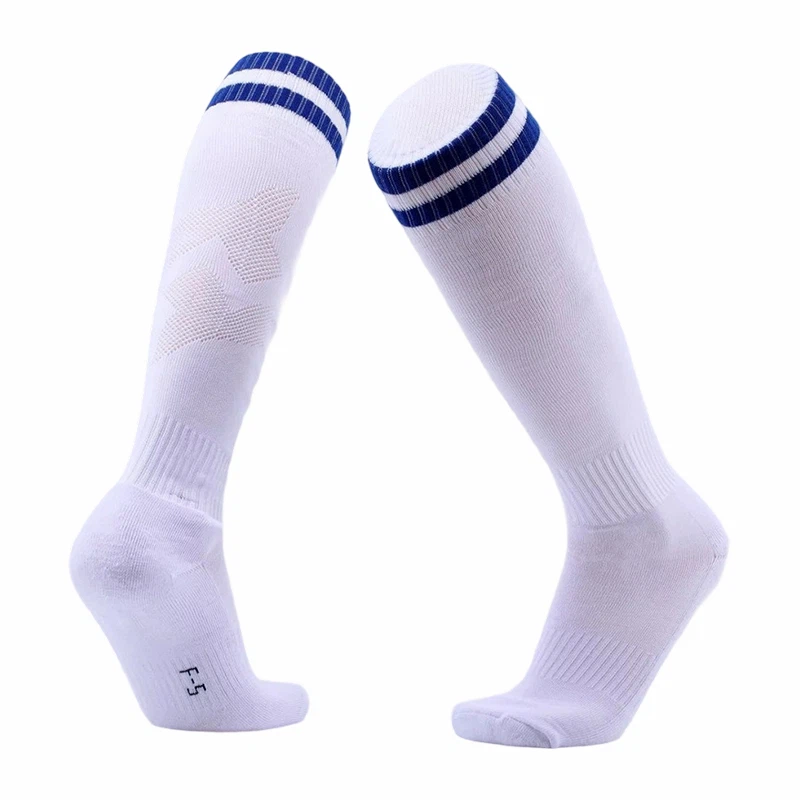
Youth football socks are not just functional; they are also a part of the team's uniform and a way for young players to express their identity. Bright and long - lasting colors enhance the overall look of the team, boosting team spirit and pride. If the colors of the socks fade quickly, it can make the team look shabby and unprofessional.
2. Durability
Good colorfastness is an indicator of the overall quality of the socks. Socks that maintain their color are likely to be more durable in other aspects as well. This means they can withstand the rigors of football games, including constant movement, stretching, and contact with the ground.

3. Hygiene
When colors bleed or transfer, it can create an unhygienic situation. For example, if the dye from the socks transfers onto the player's skin, it may cause irritation or allergic reactions. Additionally, in a shared laundry environment, color - bleeding socks can stain other items, leading to potential hygiene issues.
Factors Affecting Colorfastness in Youth Football Socks
1. Dye Quality
The type and quality of dyes used in the manufacturing process play a significant role in colorfastness. High - quality dyes are formulated to have better adhesion to the fabric fibers and are more resistant to fading and bleeding. At our company, we use only the finest dyes that meet strict quality standards to ensure excellent colorfastness in our Youth Football Socks.
2. Fabric Type
Different fabrics have different levels of absorbency and affinity for dyes. Synthetic fabrics, such as polyester and nylon, often have better colorfastness compared to natural fibers like cotton. However, a blend of fabrics can also be used to achieve a balance between comfort, breathability, and colorfastness. Our youth football socks are made from a carefully selected blend of fabrics that optimize both color retention and performance.
3. Manufacturing Process
The way the socks are dyed and finished can also affect colorfastness. Proper dyeing techniques, such as using the right temperature, pH levels, and dyeing time, are essential for ensuring that the dyes penetrate the fabric evenly and adhere firmly. Additionally, post - dyeing treatments, such as fixing agents, can further enhance colorfastness.
4. Usage and Care
How the socks are used and cared for also impacts colorfastness. Frequent exposure to harsh detergents, high - temperature washing, and direct sunlight can all cause the colors to fade more quickly. We provide clear care instructions with our youth football socks to help customers maintain the colorfastness of the products.
Testing Colorfastness in Youth Football Socks
To ensure that our youth football socks meet the highest standards of colorfastness, we conduct a series of rigorous tests. These tests simulate real - life conditions that the socks may encounter during use and laundering.
1. Wash Fastness Test
In this test, the socks are washed multiple times using a standard detergent and washing machine settings. After each wash, the color change of the socks is evaluated using a color - matching scale. This helps us determine how well the colors hold up during regular laundering.
2. Rubbing Fastness Test
The rubbing fastness test measures the resistance of the colors to rubbing. A small piece of the sock is rubbed against a white fabric under a specified pressure and number of rubs. The amount of color transferred onto the white fabric is then assessed to determine the rubbing fastness of the socks.
3. Light Fastness Test
To test the light fastness, the socks are exposed to artificial sunlight for a certain period. The color change of the socks is then evaluated to determine how well the colors withstand sunlight exposure.
Our Commitment to Colorfastness
As a supplier of youth football socks, we are committed to providing products with excellent colorfastness. We invest in research and development to continuously improve our dyeing and manufacturing processes. Our team of experts closely monitors every step of the production process to ensure that the colorfastness standards are met.
We also offer a wide range of Non Slip Football Socks and Childrens Football Socks that are designed with the same high - quality standards in terms of colorfastness. Our products are not only colorful and durable but also comfortable and functional, meeting the needs of young football players.
Contact Us for Procurement
If you are interested in purchasing our youth football socks or have any questions about our products, we encourage you to contact us for procurement discussions. We are always ready to provide you with detailed product information, samples, and competitive pricing. Our dedicated customer service team will work closely with you to ensure that your requirements are met.
References
- Textile Institute. "Colorfastness Testing Methods."
- American Association of Textile Chemists and Colorists (AATCC). "Standards for Colorfastness in Textiles."